Fifa accelerates plans to expand World Cup to 64 teams from 2030 tournament

Fifa is advancing plans to expand the World Cup to 64 teams starting from the 2030 tournament. The global governing body has initiated a tender process to engage research companies to evaluate the economic advantages of this expansion, with a notably compressed timeline.
A “research brief” has been issued, detailing a consultation process to assess the potential increase from the current 48 teams. The selected research party, to be chosen by 14 August, will have a period of four weeks to analyse the proposed expansion. Fifa has set a deadline of 11 September for the analysis to be delivered, suggesting a decision could be made this year.
Expansion and Governance Concerns
The study on expansion comes amid questions regarding Fifa’s governance, particularly after revelations about Gianni Infantino’s plans to sell portions of the World Cup to private investors. Uefa has previously indicated a boycott of future tournaments if Fifa proceeds with this scheme, and further opposition is anticipated regarding the 64-team expansion proposal. Member associations were reportedly not informed about the tender before its issuance.
The invitation to tender specifies that Fifa is “considering the strategic implications of a possible expansion of the Fifa World Cup beyond the current format.” It requests an impact assessment focusing on tournament revenue and the broader implications for the football ecosystem. Agencies are required to submit their research proposals by 7 August.
Infantino had previously stated in July that an expansion would be discussed by relevant committees after the conclusion of the current World Cup. Speculation about such a move had been growing, particularly with support from the South American governing body Conmebol, whose president, Alejandro Domínguez, reiterated the idea after the 2026 tournament.
The 2030 World Cup is scheduled to be co-hosted by Morocco, Portugal, and Spain, with individual matches also planned in Argentina, Paraguay, and Uruguay to mark the tournament’s 100th anniversary. An expansion to 64 teams could mean that each of these countries might host an entire group.
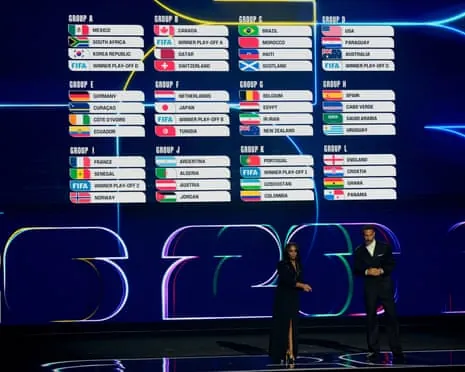
Both Uefa and Concacaf have voiced opposition to further World Cup expansion. Fifa’s decision to proceed with the plans could intensify resistance from these governing bodies.
Potential Boycott and Host Nation Implications
The dispute between Fifa and Uefa over the investment proposal could lead to an unprecedented situation at the 2030 World Cup. If Fifa moves forward with its plan and Uefa implements its boycott threat, co-hosts Spain and Portugal could be absent from the tournament they are set to stage.
Uefa’s warning followed an emergency meeting of its 55 member associations, which unanimously rejected Fifa’s proposal. Uefa stated that the World Cup should not be treated as an investment product and confirmed that its national teams would not participate in Fifa competitions as long as the proposal remains active, extending this stance to both men’s and women’s World Cups.
The implications are particularly significant for Spain and Portugal, as they are primary hosts for the 2030 World Cup. If Uefa maintains its boycott, these two European co-hosts would not participate in the tournament, despite hosting the majority of the competition. This scenario would be unique in World Cup history, with principal host nations absent due to a dispute between football’s governing bodies rather than a failure to qualify.
The position of Morocco, another principal host for 2030, remains unclear. Unlike Uefa, Concacaf, and the Asian Football Confederation (AFC), the Confederation of African Football (CAF) has not formally declared its stance on Fifa’s investment proposal. Conmebol has not taken an official position on the investment proposal, though its president has previously supported expanding the 2030 World Cup to 64 teams.
Fifa’s research brief also seeks analysis on how various stakeholders might react to or resist any expansion. It requests conclusions on player welfare, product quality, and the international calendar. The agency is also tasked with identifying the estimated revenue from ticketing, sponsorship, and media rights that would be generated by a 64-team format.
Should Fifa confirm the switch to 64 teams, the 48-team format, which debuted this summer, would have a short lifespan. From 1998 to 2022, 32 teams competed in each World Cup. The short timeframe allocated for assessing such a significant change, which also has implications for the number of suitable future host regions, has raised concerns.
Fifa has stated that its proposal for FIFA Forward Enterprise is intended to allow member associations to benefit from commercial opportunities while maintaining the governance of the game. The organisation also stressed that the proposal is part of an ongoing consultation process, and member associations retain the power to approve, amend, or reject it. If a majority does not support the plan, Fifa’s commercial operations will remain unchanged, and FIFA Forward Enterprise will not be established.
The dispute has intensified, with Concacaf and the AFC also rejecting the proposal. Carlos Cordeiro, a senior adviser, resigned, stating his opposition to the proposal. The debate has evolved beyond a commercial restructuring plan, potentially reshaping the composition of the 2030 World Cup.
Fifa was approached for comment regarding these developments.
Source: theguardian.com

